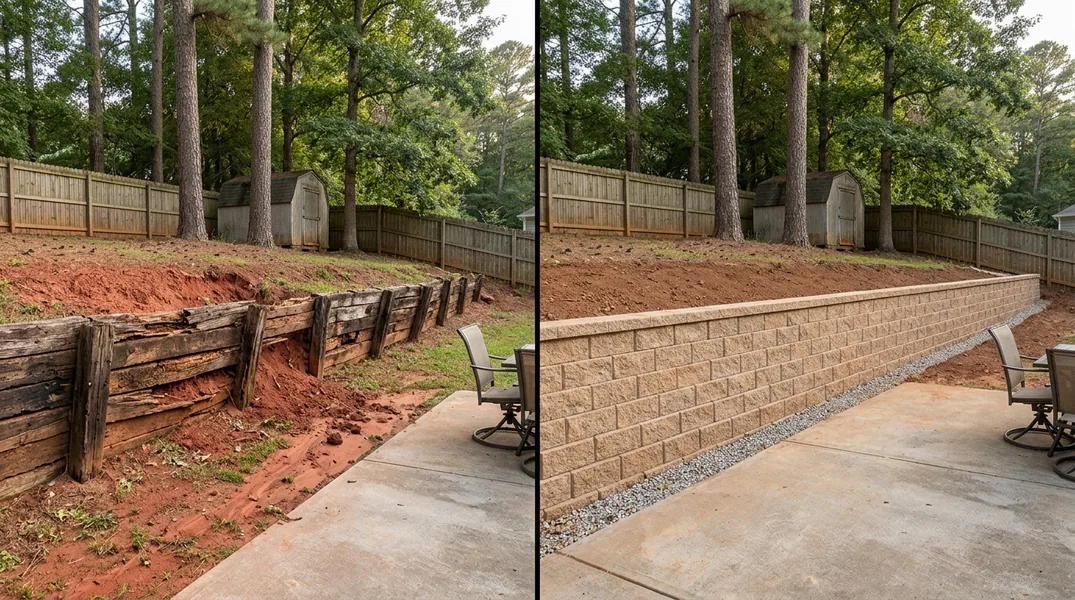
Retaining Wall Permit Rules in Durham: The Basics
If you are planning a retaining wall on your property in Durham, one of the first questions you will face is whether you need a permit. The answer depends on several factors, most importantly the height of the wall and its location relative to property lines and slopes. In general, local building codes require a permit for retaining walls that exceed a certain height, typically four feet, measured from the bottom of the footing to the top of the wall. Walls that are four feet or shorter may be exempt from permitting in some cases, but there are exceptions for walls that support structures, are located near sensitive areas, or are part of a larger grading plan.
It is important to understand that even if a permit is not required, the wall must still be built to code and be structurally sound. Many homeowners assume that a short wall is automatically safe, but improper drainage, inadequate footing, or poor soil conditions can cause even a low wall to fail. This is why it is always wise to consult with a professional Retaining Wall Installation contractor who understands local regulations and can help you determine whether your project needs a permit.
The 4-Foot Retaining Wall Permit Rule Explained
When homeowners ask, “Do I need a permit for a retaining wall?” the most common threshold cited is four feet. In many jurisdictions, including Durham, a retaining wall that is four feet or less in height (measured from the bottom of the footing to the top of the wall) does not require a building permit. However, this exemption is not absolute. If the wall is part of a tiered system, if it supports a driveway or structure, or if it is located on a slope steeper than a certain ratio, a permit may still be required. Additionally, walls that are close to property lines or easements may trigger additional review.
The four-foot rule is a good starting point, but it is not a substitute for checking with the local planning department. Because regulations can change and interpretations vary, it is best to confirm with the city or county before you build. A reputable contractor can also guide you through the process and ensure that your wall meets all applicable codes, even if a permit is not required. For walls that exceed four feet, a permit is almost always necessary, and you will need to submit engineered plans or drawings stamped by a licensed professional.
Retaining Wall Height Limits and Structural Requirements
Beyond permits, there are practical height limits for retaining walls. In Durham, walls taller than four feet typically require a permit and often must be designed by a licensed engineer. This is because taller walls retain more soil and are subject to greater lateral pressure, which can lead to failure if not properly engineered. Even walls under four feet can fail if they are not built with proper drainage, backfill, and compaction. Common height limits for residential retaining walls are often around six to eight feet, but anything above four feet usually triggers additional requirements.
It is also important to consider the type of wall. Concrete Retaining Walls are durable and can be built taller, but they require proper reinforcement and footings. Segmental block walls are popular for residential projects and can be engineered for greater heights, but they also have limits. If you are unsure about the height limits for your specific project, consult a professional. They can assess your site, recommend the appropriate wall type, and ensure that your wall is both safe and compliant.
Why Hiring a Professional Matters for Permit Compliance
Navigating permit requirements can be confusing, especially for homeowners who are not familiar with local building codes. A professional retaining wall contractor can handle the permit application process, ensure that your plans meet all requirements, and coordinate inspections. This saves you time and reduces the risk of costly delays or fines. Moreover, a professional will build the wall to code, which is critical for safety and longevity. Even if your wall is exempt from permitting, having it built by a qualified contractor ensures that it will perform as intended and not become a liability.
If you are considering a Retaining Wall Replacement or repair, the same rules apply. Replacing an existing wall may require a permit if the new wall exceeds the height threshold or if the original wall was permitted. A contractor can help you determine what is needed and handle the paperwork. For homeowners in Chapel Hill or Carrboro, similar rules may apply, so it is always best to work with a local expert who knows the area.
Retaining Wall Installation Near Me: When to Call a Pro
If you are searching for “retaining wall installation near me” in Durham, you are likely looking for a reliable contractor who can handle everything from design to permits. While DIY retaining walls are possible for very short, decorative walls, anything that retains significant soil or is close to a structure should be left to professionals. The risks of improper installation include wall collapse, water damage, and injury. A professional contractor will assess your site, recommend the best materials, obtain necessary permits, and build a wall that lasts.
Durham Retaining Wall is a local company that specializes in retaining wall installation, repair, and replacement. We understand the local permitting process and can help you navigate the requirements for your project. Whether you need a simple garden wall or a large structural wall, we can provide a free estimate and guide you through every step. Call us at (984) 538-7560 to discuss your project and ensure it is done right.
Retaining Wall Installation Cost in Durham: What to Budget
The cost of a retaining wall in Durham varies widely based on height, length, materials, and site conditions. A simple segmental block wall might start around $30 to $50 per square foot, while concrete or engineered walls can cost significantly more. Permit fees, if required, are typically a few hundred dollars but can add to the overall budget. It is important to factor in drainage, backfill, and labor, as these can affect the final pricing.
When budgeting for a retaining wall, do not cut corners on permits or engineering. A wall that fails because it was not properly permitted or built can cost far more to repair than doing it right the first time. For homeowners in Morrisville and surrounding areas, it is wise to get multiple quotes and ask contractors about permit handling. A professional contractor will provide a transparent estimate that includes permit costs and any engineering fees, so you know exactly what to expect.
Looking for a professional retaining wall contractor in Durham? Durham Retaining Wall responds fast for all your retaining wall needs.
Get a Free QuoteOur services: Retaining Wall Installation · Retaining Wall Repair · Retaining Wall Replacement